
Introduction: Setting the Scene
- Begin with a reflection on Holy Week and its significance in the Christian journey.
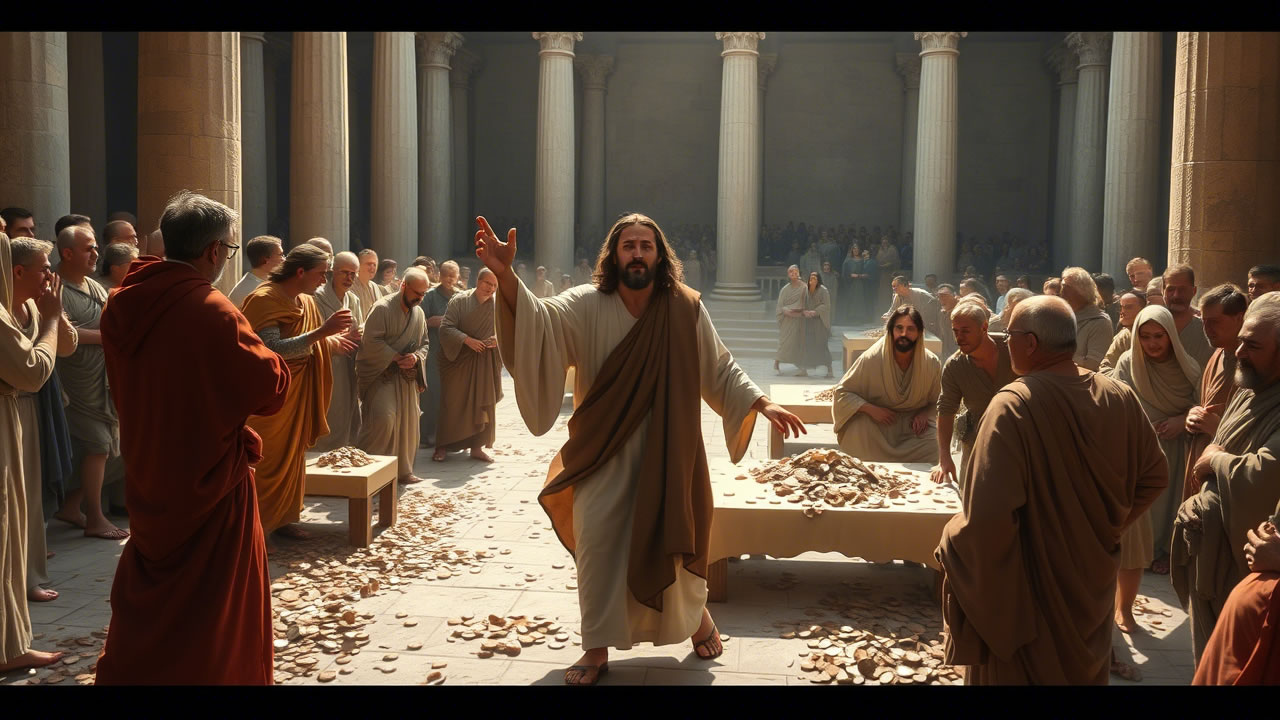
- Highlight Matthew 21:12, where Jesus cleanses the temple—a pivotal moment that reveals His heart for holiness over human agendas.
- Transition to how this ancient story speaks directly to us today as temples of the Holy Spirit (1 Corinthians 6:19).
- Add Isaiah 56:7—"My house will be called a house of prayer for all nations"—to emphasize God’s original intent for the temple.
I. The Temple’s True Purpose: Worship Over Profit
- A. The Problem in the Temple Courts
- Discuss how the people had turned the sacred space into a marketplace, prioritizing profit and performance over worship (Matthew 21:12-13).
- Explain how their actions distorted the temple’s purpose—to be a house of prayer (Isaiah 56:7) and a place of communion with God (Exodus 25:8).
- B. A Mirror for Our Lives
- Reflect on Ephesians 2:19-22, which reminds us that believers are now part of God’s household and living stones built into His spiritual temple.
- Ask: Have we replaced worship with worldly pursuits? Are we striving for success or control instead of resting in Him (Psalm 127:1-2)?
II. Jesus’ Intervention: Turning Over Tables
- A. Why Jesus Acted
- Share how Jesus’ actions were not just about cleansing the physical temple but also restoring hearts to focus on what truly matters—holiness and dependence on God (Malachi 3:3—“He will sit as a refiner and purifier of silver”).
- Note that Jesus disrupts systems and behaviors that distract from His presence (John 2:16-17; Psalm 69:9—“Zeal for your house consumes me”).
- B. What It Means for Us Today
- As His temple now, God may need to “turn over tables” in our lives when we’ve become distracted by anxious striving, worry, or self-reliance (Luke 10:41-42—Martha vs. Mary).
- Highlight the truth that these disruptions are acts of love meant to realign us with His purposes (Hebrews 12:11—“No discipline seems pleasant at the time…”).
III. Surrendering to God’s Plan
- A. Dependence Over Striving
- Explore the contrast between human effort and divine provision (Proverbs 3:5-6—“Trust in the Lord with all your heart…”).
- Quote Scripture such as Psalm 46:10 (“Be still, and know that I am God”) and Matthew 11:28-30 (“Come to me, all who are weary…”).
- B. Trusting God Through Disruptions
- Acknowledge that God allows interruptions and challenges to draw us closer to Him (James 1:2-4—“Consider it pure joy whenever you face trials…”).
- Remind listeners that surrender is not passive; it’s an active choice to trust God’s wisdom above our own plans (Romans 8:28—“And we know that in all things God works for good…”).
IV. Removing What’s Unnecessary
- A. Creating Space for What Matters
- Talk about the importance of decluttering our lives—physically, emotionally, and spiritually (Colossians 3:5—“Put to death whatever belongs to your earthly nature…”).
- Encourage the congregation to evaluate areas where they might be holding onto things that hinder intimacy with God (Hebrews 12:1—“Let us throw off everything that hinders…”).
- B. Focusing on Eternal Priorities
- Challenge them to prioritize relationships, service, and worship over temporary achievements or material gain (Matthew 6:19-21—“Store up treasures in heaven…”).
- Use examples like Mary choosing “the better part” (Luke 10:38-42) and Paul’s perspective on eternal values (Philippians 3:7-8—“Whatever was to my gain I now consider loss…”).
V. Embracing God’s Gentle Correction
- A. Recognizing His Mercy in Disruption
- Reassure the audience that God’s corrections are always rooted in love and mercy (Lamentations 3:22-23—“Because of the Lord’s great love we are not consumed…”).
- Point out that His interventions aim to bring healing, restoration, and deeper fellowship with Him (Psalm 119:71—“It was good for me to be afflicted so that I might learn your statutes”).
- B. Meeting God at the End of Ourselves
- Conclude with the reminder that God meets us most profoundly when we come to the end of our strength and resources (2 Corinthians 12:9-10—“My grace is sufficient for you…”).
- Invite listeners to surrender fully to Him during this Holy Week, trusting that His mercies will lead them home (Micah 6:8—“He has shown you, O mortal, what is good…”).
Conclusion: Invitation to Reflection and Response
- Summarize key points:
- The temple’s true purpose is worship, not profit (Isaiah 56:7; Exodus 25:8).
- Jesus overturns tables to restore holiness and dependence (Malachi 3:3; John 2:16-17).
- Surrendering to God removes distractions and creates space for His work (Colossians 3:5; Hebrews 12:1).
- End with a prayerful invitation:
- Encourage the congregation to reflect on any “tables” in their hearts that need overturning (Psalm 139:23-24—“Search me, O God…”).
- Pray together for courage to embrace God’s gentle correction and experience His beautiful mercies anew (Ephesians 3:20-21—“Now to him who is able to do immeasurably more…”).
Closing Thought:
"Let us enter this Holy Week with open hands and surrendered hearts, ready to receive all that God desires to do within us."
